Cable Installation
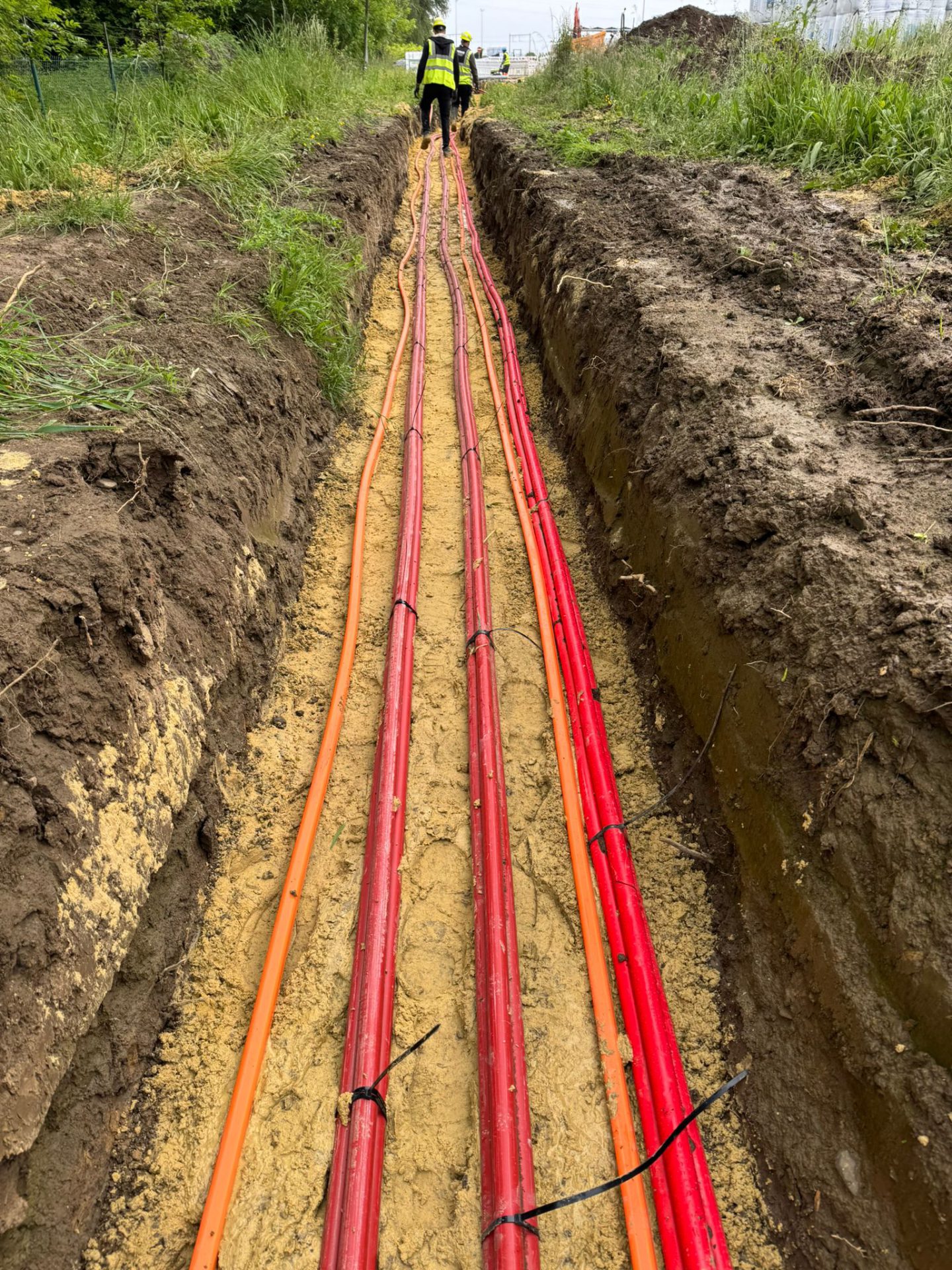
Cable Installation Tailored to Every Project
Reliable cable installation requires experience, precision and the right techniques. For businesses, utility companies and industrial projects, every assignment is tailored to the specific requirements of the site and project. Both manual and automated cable installation methods are available, allowing us to install heavy cables and conductors of up to 2,000 mm². Using specialised techniques and equipment, such as cable pushers and cable winches, cables can be installed safely, efficiently and accurately, even along complex routes or over longer distances. We focus on smooth execution and clear communication with the client, with quality, safety and flexible planning always at the forefront.
We install a wide range of cable types, including power cables, overhead line cables, signal cables, microducts, fibre optic cables, earthing cables and Raycap cables. Each type of cable is installed with the necessary expertise to ensure a correct and durable installation, fully adapted to the specific requirements of the project.
Installation Methods
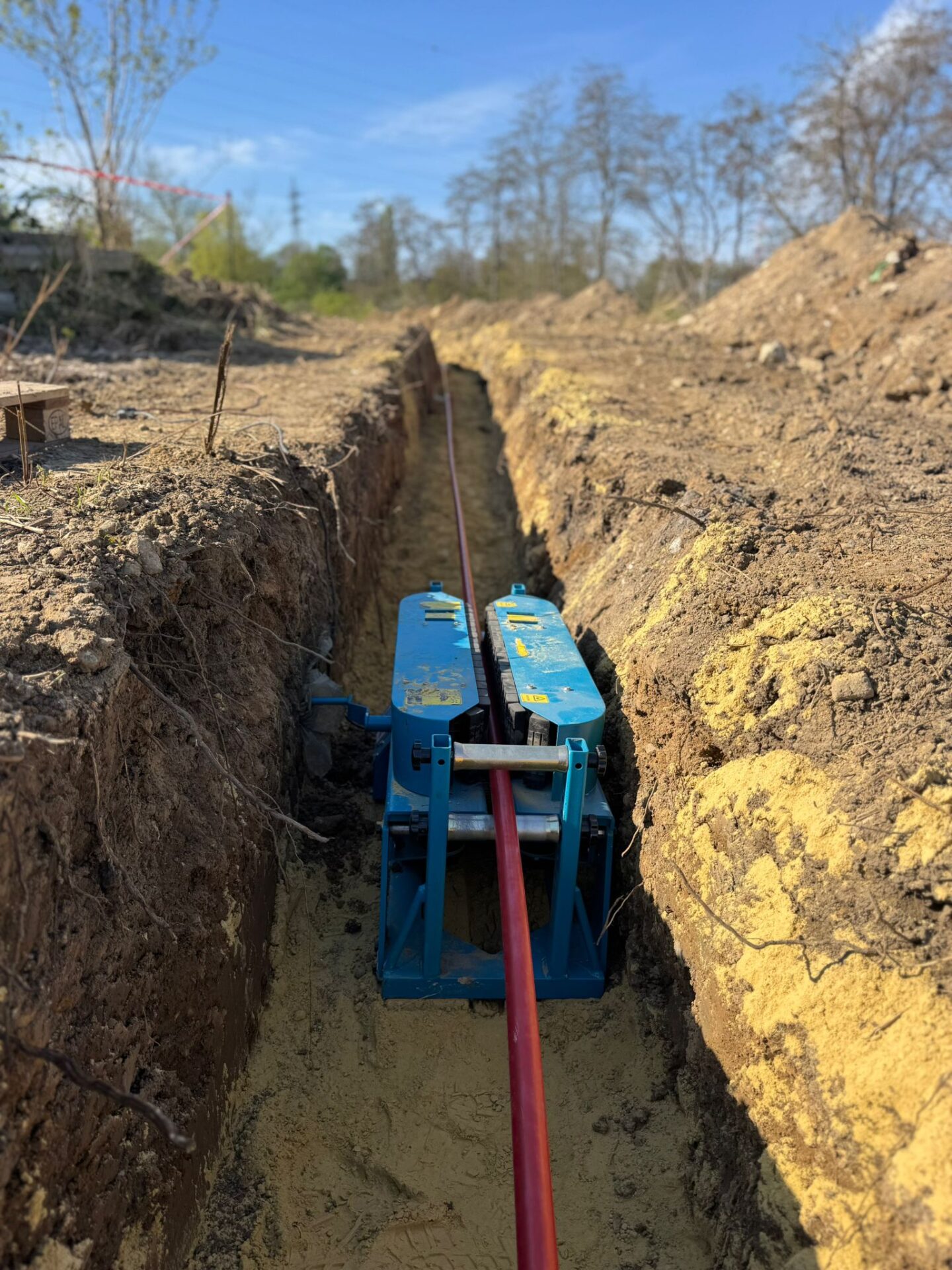
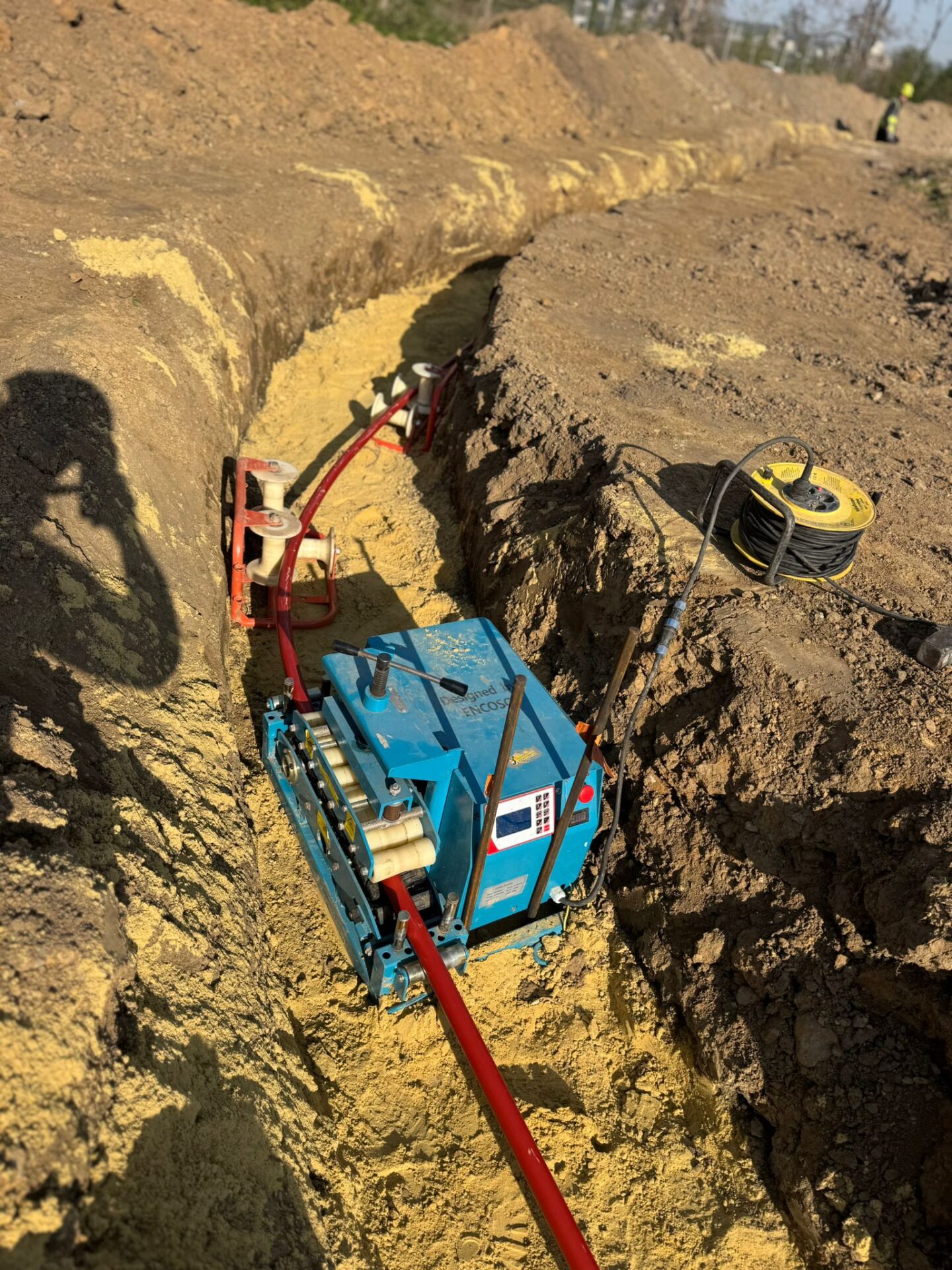
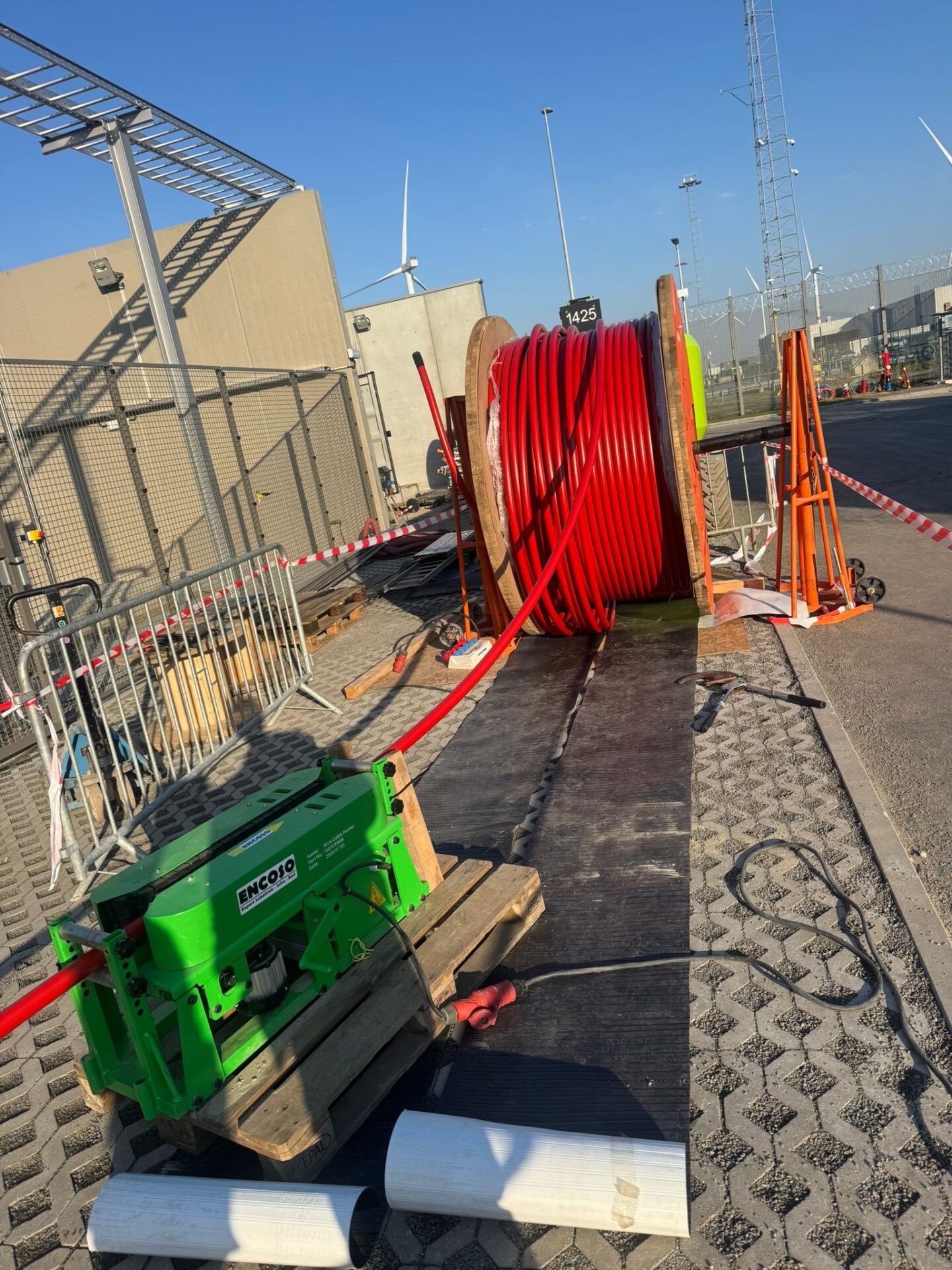
Cable Pushers
One of our key strengths in cable pulling is our range of cable pushers, which allow cables to be pushed through the route in a controlled, safe and efficient manner across a wide range of applications. Depending on the type of project and cable load, different power classes are available, ranging from light-duty to medium-duty and heavy-duty models.
- 3.8 kN Electric Cable Pusher
- 6 kN Electric Cable Pusher
- 8 kN Electric Cable Pusher
- 12 kN Hydraulic Cable Pusher
Our three electric machines operate on 240 V, can be synchronised with each other, and are easy to operate using a remote control, providing maximum control during installation. The hydraulic cable pusher is only used in exceptional situations.
Using cable pushers significantly reduces friction on the cable and allows installation to be carried out in a consistent and controlled manner. This means that cables can be installed safely and ergonomically, even in complex situations or over longer routes.


Cable Winch
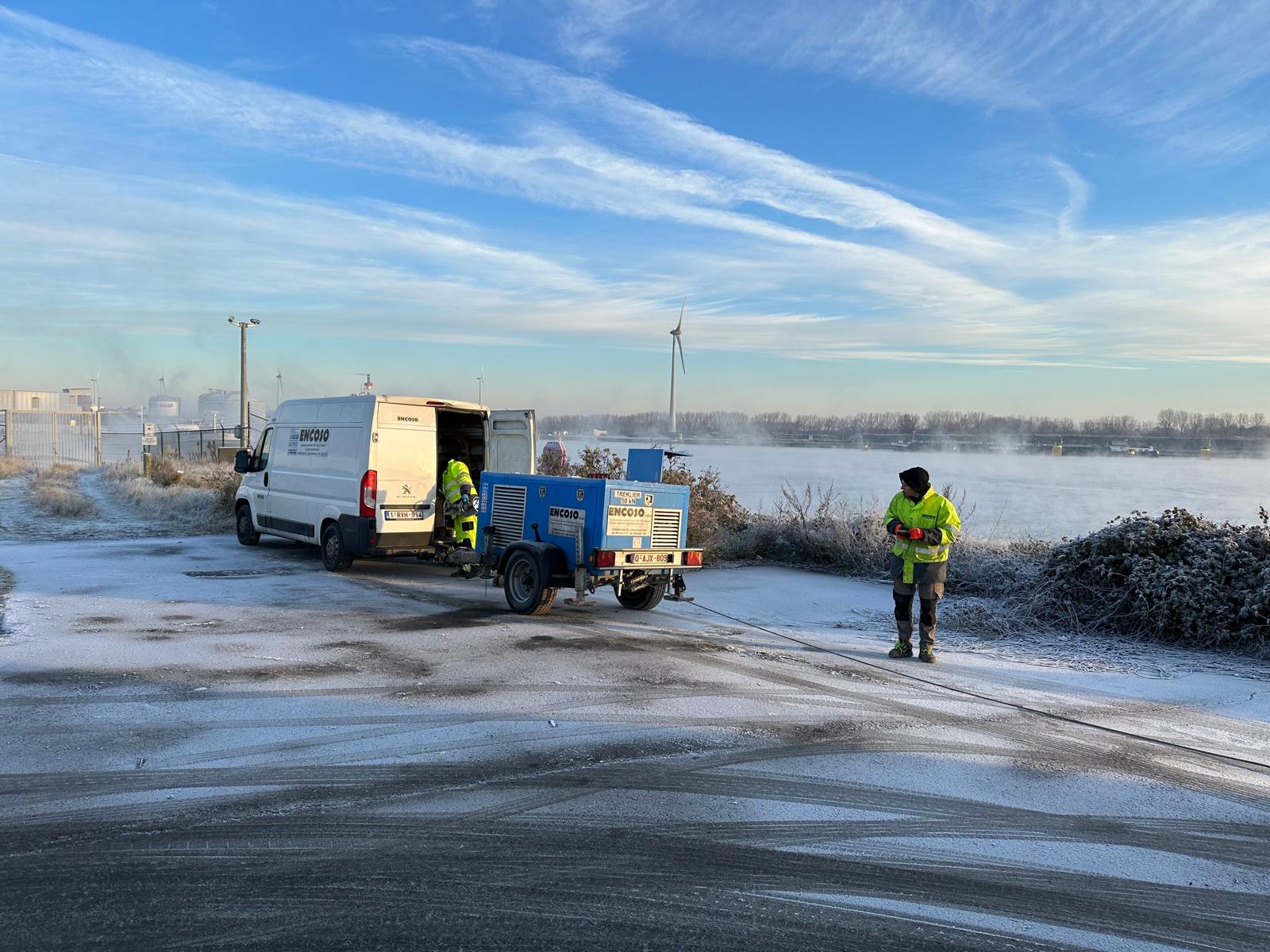
A second method we use for our cable installation work is our cable winch. This is mainly used when a higher pulling force is required, such as on longer routes.
The cable is pulled through the route using a pulling sock and a constant, adjustable pulling force. The digital control system allows the operator to accurately adjust the pulling force and speed parameters and continuously monitor the pulling process. This prevents overloading and protects the cable against damage, deformation or stretching. This precise control ensures a high-quality installation, even for longer, heavier or difficult-to-access pulling operations, such as pulling cables through underground ducts.
Today, our cable winch is used as standard for a large proportion of our cable pulling projects. When combined with our cable pushers, the installation process can also be semi-automated, resulting in efficient and controlled cable placement while also improving ergonomics for our technicians.


Manual Installation
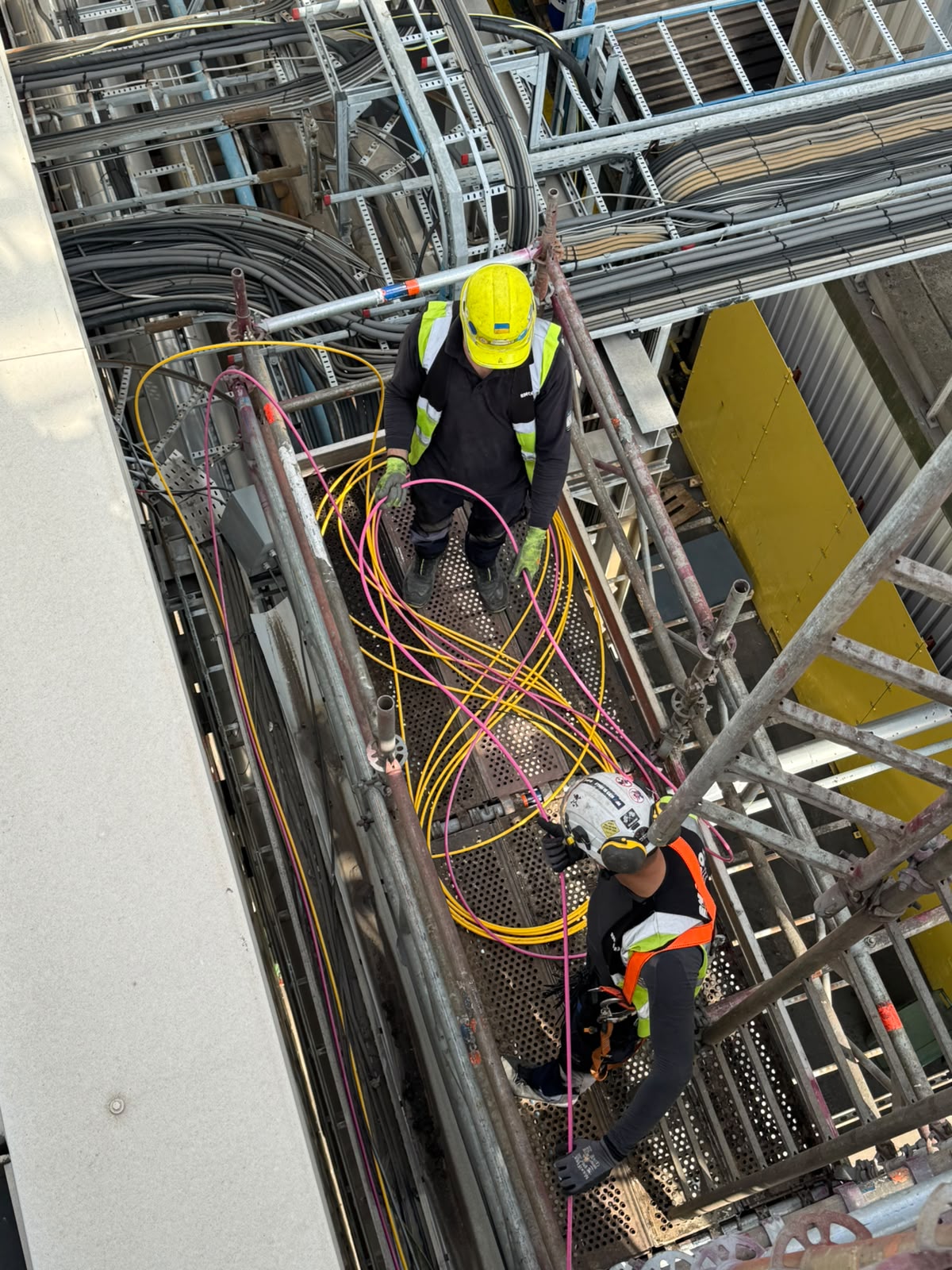
Manual cable installation requires significant physical effort, especially when working with heavier cables, which is why we generally prefer to use our automated techniques wherever possible. However, when the route or working conditions require it, we can also install all types of cables manually where necessary.
This is carried out with the necessary care and control to ensure that the cable is safely and correctly installed along the entire route, including in difficult-to-access or confined spaces, while maintaining a strong focus on quality and precise finishing.


Groundworks for Cable Installation
Soft Ground
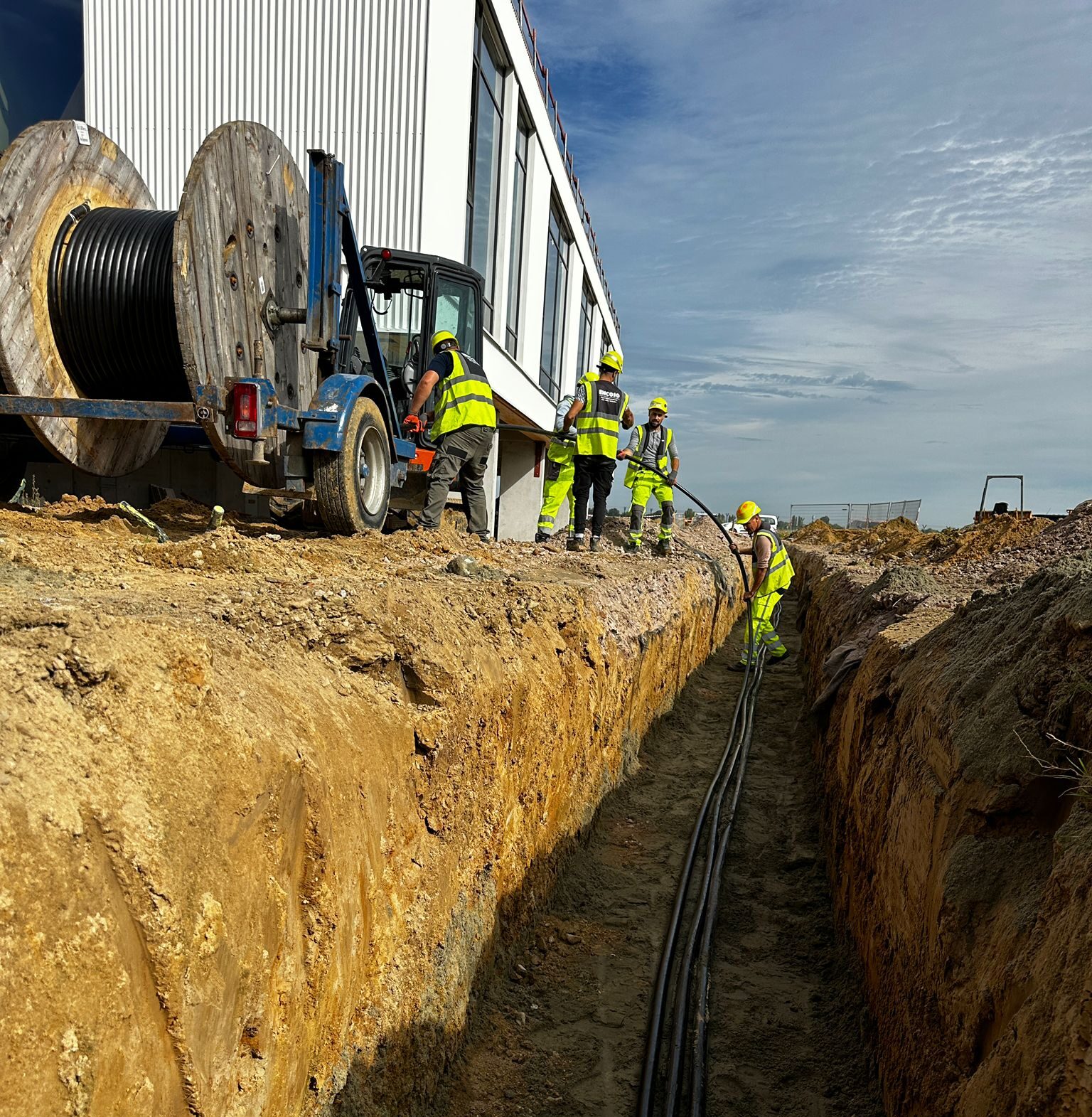
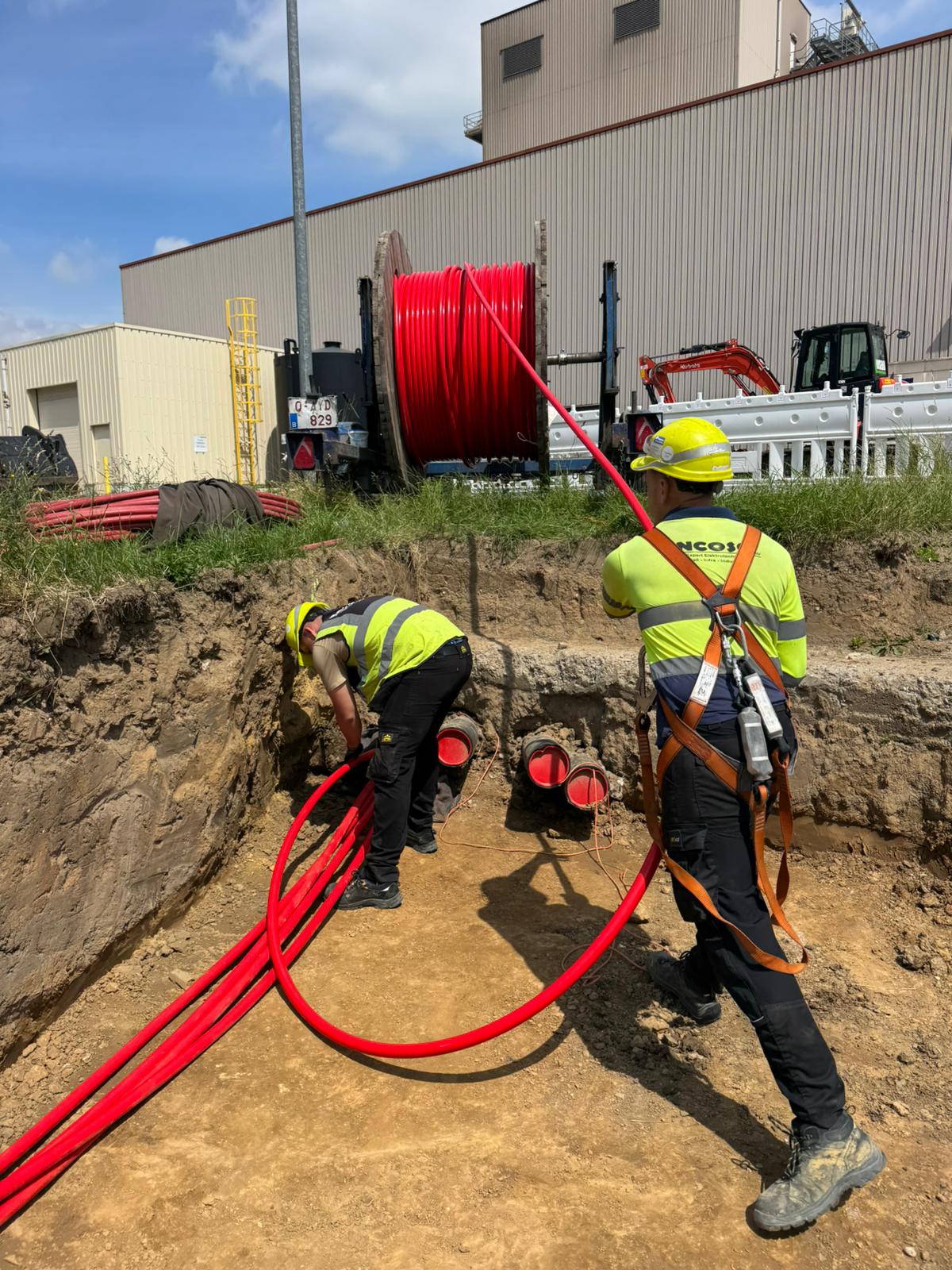
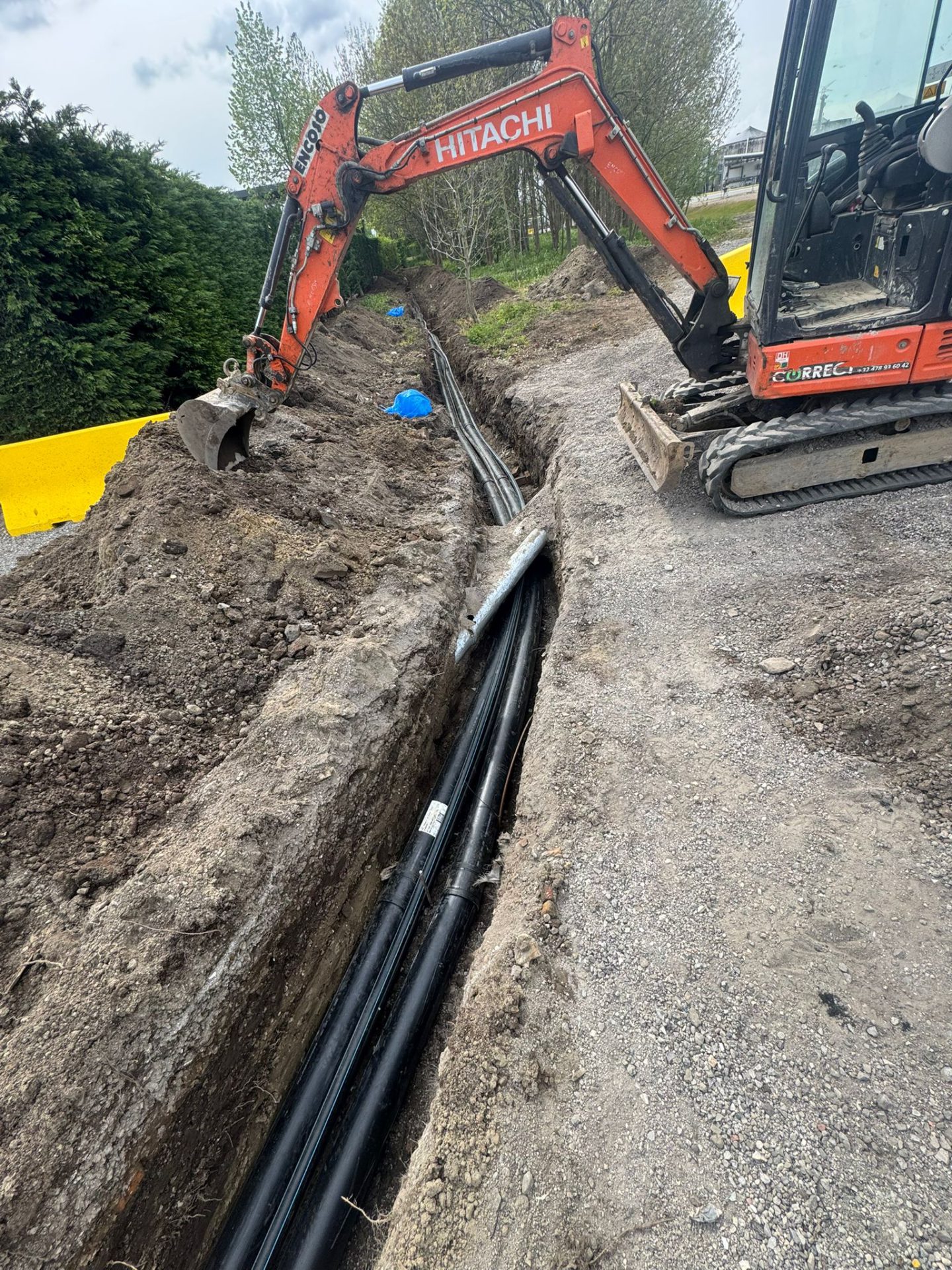
For cable installation in soft ground, we have the necessary excavators to dig trenches efficiently and in a controlled manner. Excavated material is always placed at a sufficient distance from the trench to keep the worksite organised and safe. This allows us to manage the entire installation process, from excavating the trenches and installing cables or ducts to backfilling and finishing the trench.
Where the ground conditions are more complex, such as in areas with existing cables and utilities (following a request and verification through KLIP/KLIM-CICC), or in sensitive areas such as around tree roots, our vacuum excavation truck can be deployed.
This allows excavation work to be carried out with greater precision and minimal risk of damage, while being fully adapted to the specific conditions of each worksite.



Hard Ground
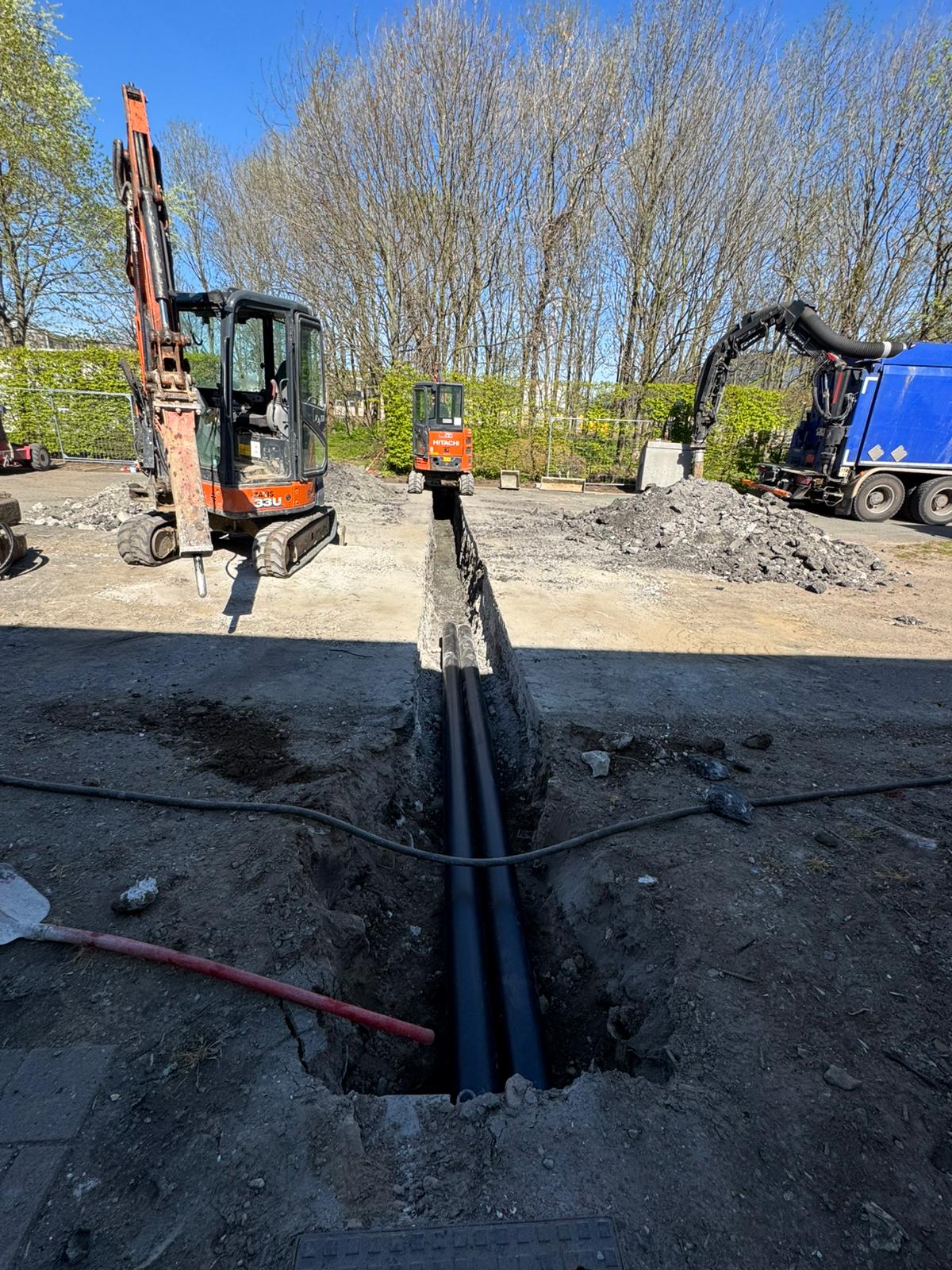
For cable installation in hard ground, we have excavators equipped with hydraulic breakers to break through asphalt and other hard surfaces in a controlled manner. This allows paved and hardened surfaces to be removed efficiently and neatly.
The resulting non-reusable materials are then removed, keeping the worksite clean and organised so that further work can be carried out safely and accurately. Once the hardened top layer has been removed, excavation of the trench can continue. This combination of techniques allows us to work efficiently, safely and in a controlled manner, even in difficult conditions and on hard surfaces.
This means we can once again take care of the entire cable installation process, from excavating trenches with or without a hardened top layer and installing cables or ducts to backfilling and finishing the trench.


FAQ
In most cases, there are very few limitations. We can handle cables with a wide range of weights, lengths and voltage ratings, as well as cables with specific sheath materials, constructions or bend radii.
Our experience ranges from telecom and fibre optic cables just a few millimetres in diameter to Elia high-voltage cables of up to 2,000 mm² and 42 kV.
The installation method is always determined based on the site-specific conditions and the type of cable work required. We assess the circumstances and select the most suitable and safest solution for each project.
We operate across a range of sectors, including industry, infrastructure and rail environments.
Onze tevreden klanten